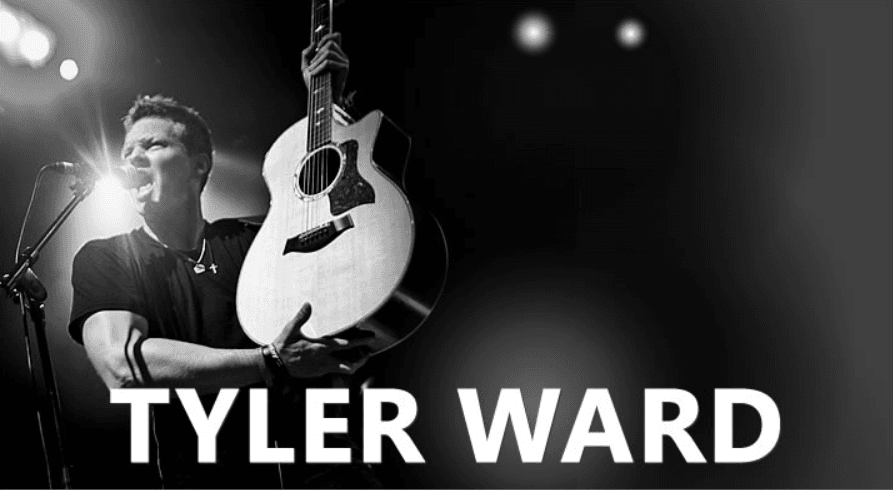
The thing about Tyler Ward’s music is that it does not just ask you to remember a song. It asks you to sit with it again, a little quieter this time. That is why finding his version of “I Wanna Dance With Somebody (Acoustic)” on Spotify can feel like stumbling into the family room after everyone has gone to bed, dishes done, lights low, earbuds in, and suddenly Whitney’s giant joy has been translated into something tender and close enough to touch. Ward’s whole career has lived in that space between familiar and intimate, and it is a bigger, more interesting world than “guy who does acoustic covers” gives him credit for.
Tyler Ward is a Colorado-born singer-songwriter, producer, and independent music entrepreneur now based in Nashville. Public bios place his roots in Aurora, Colorado, with later ties to Parker, and official materials describe him today as a producer, songwriter, artist developer, and entrepreneur. That arc matters. He is not just a vocalist who happened to do well online. He is one of those early internet-era musicians who figured out that the song was only part of the story. The connection was the other half.
A career built from the ground up
There is something very Colorado about the Tyler Ward story. Not in a cowboy-hat caricature way. More in the self-starter, build-it-yourself, take-the-long-road kind of way. Colorado Music Experience notes that after high school in Parker, Ward attended the Air Force Academy and later pursued journalism at the University of Northern Colorado before writing, recording, and posting music online. That path explains a lot about his work. You can hear ambition in it, yes, but also process. His songs and covers often feel worked through, not tossed off. Like somebody sat with the idea until the emotional splinters made sense.
He emerged in that fascinating window when YouTube still felt scrappy and direct, when posting a cover online still carried the charge of a homemade introduction instead of a content strategy. Public sources place his active years beginning around 2007, and Billboard recognized him during its Uncharted era as one of the breakout artists rising through digital platforms rather than traditional industry lanes. That makes him part of a very specific pop culture lineage, the bridge between MySpace-era hustle and TikTok-era omnipresence. He was early enough to help invent the path, which honestly deserves more respect than it gets.
More than “the cover guy”
The cleanest label for Ward’s sound is acoustic pop-rock with singer-songwriter bones and a little country-pop shading. Public references describe his music in that neighborhood, and his catalog backs it up. Yes, he is deeply associated with stripped-down covers, but that is only part of the story. His discography moves through originals, collaborations, and Nashville-centered songwriting projects, including Honestly (2013), Reputation (2017), Covers & Co-writes (2018), he said. she said. (2019), Songs From Nashville (2020), and Cover To Cover (2025). That is not the catalog of someone dabbling. That is a working artist who kept building, kept refining, and kept honoring the sound people first came for.
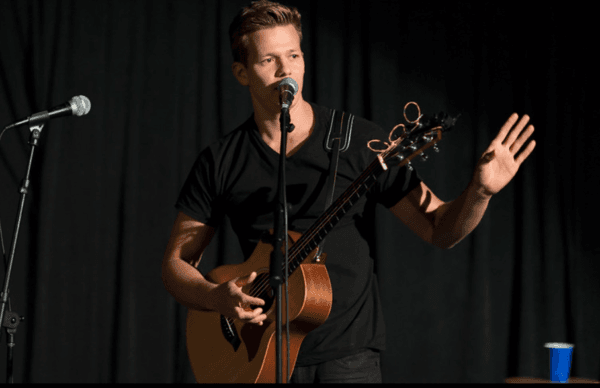
What Ward does especially well is emotional reframing. His signature move is not simply slowing a song down. Lots of people can do that. His trick is making a big pop hit feel less like spectacle and more like subtext. A singalong becomes a conversation. A heartbreak anthem becomes the moment after the text is sent and before the dots appear. That is why his covers land. They do not try to overpower the original. They sidestep it and offer a different way in. Nobody needs a discount Whitney. What listeners respond to is a new emotional angle.
The craft underneath the softness
Ward is primarily known for vocals and guitar, especially in live and video settings, but public bios also credit him with piano, bass, and drums. That fuller instrumental range tracks with the fact that he is also a producer. He is not just standing in front of a mic with good cheekbones and a nice reverb preset. He understands song construction from the inside, which helps explain why even simple acoustic arrangements tend to feel structurally solid instead of flimsy. There is a difference between stripped-down and undercooked. Tyler Ward has always understood that difference.
And if Spotify is your entry point, his profile makes his lane pretty clear. Among his prominent tracks are acoustic or stripped-down takes on “Shallow,” “Africa,” “The Scientist,” and yes, “I Wanna Dance With Somebody (Acoustic).” That list alone tells a story. He gravitates toward songs with huge melodic identities, then remaps them into something softer and more interior. He does not flatten them. He translates them.
The originals matter too
This is where I want to raise one bold little eyebrow on his behalf. Artists who get known for covers are often treated like they are renting space in music instead of owning property there. That is nonsense. Ward released Honestly through Sony Music Germany in 2013, and his later catalog shows a steady commitment to original music and collaborative writing. His official materials frame him not only as an artist but as a producer and artist developer, which suggests a career built around songcraft, not just performance. The covers may open the door, but the originals are where the furniture lives.
That distinction matters because his career has never really been about imitation. It has been about interpretation, and then expansion. First the cover draws you in. Then the original work shows you what he sounds like when there is no famous ghost in the room. That is where a lot of artists lose people. Ward does not. He keeps the emotional accessibility that made the covers resonate in the first place.
Tyler Ward now
Official sources show Ward currently based in Nashville and deeply involved in Song House, which he describes as one of his favorite endeavors. His site says Song House grew out of a desire to give songwriters and musicians a chance to be heard, later gaining traction through its “30 min to write a hook” concept and building a large social following. His other official materials present him as someone who has built multiple music businesses around modern artist development. That matters because his current identity is bigger than performer alone. He looks increasingly like a builder of ecosystems, the kind of artist who not only makes songs but helps shape the conditions in which other artists can survive.
Why Tyler Ward matters in pop culture
Tyler Ward’s career makes more sense once you stop measuring artists only by the old industry ruler. He is not a cautionary tale about internet fame. He is one of the proof-of-concept stories. Independent. Adaptive. Musically literate. Platform-savvy before that was a job description. He used covers not as karaoke, but as relationship-building, then parlayed that into albums, touring, production work, and artist development. In a culture that loves to sneer at sincerity right up until it needs comfort, that feels almost subversive.
Maybe that is the sweetest part of this whole thing. I went looking for one beloved cover, got mildly betrayed by Spotify, and ended up finding an artist worth sitting with a little longer. That is how pop culture love stories happen for me. Not always through the biggest star, but through the side door. Through the version that catches me off guard. Through the singer who knows how to turn a giant song into a smaller room, and somehow make it feel more human there.
Tyler Ward has built a career in that room. Honestly, that is a world worth writing about.