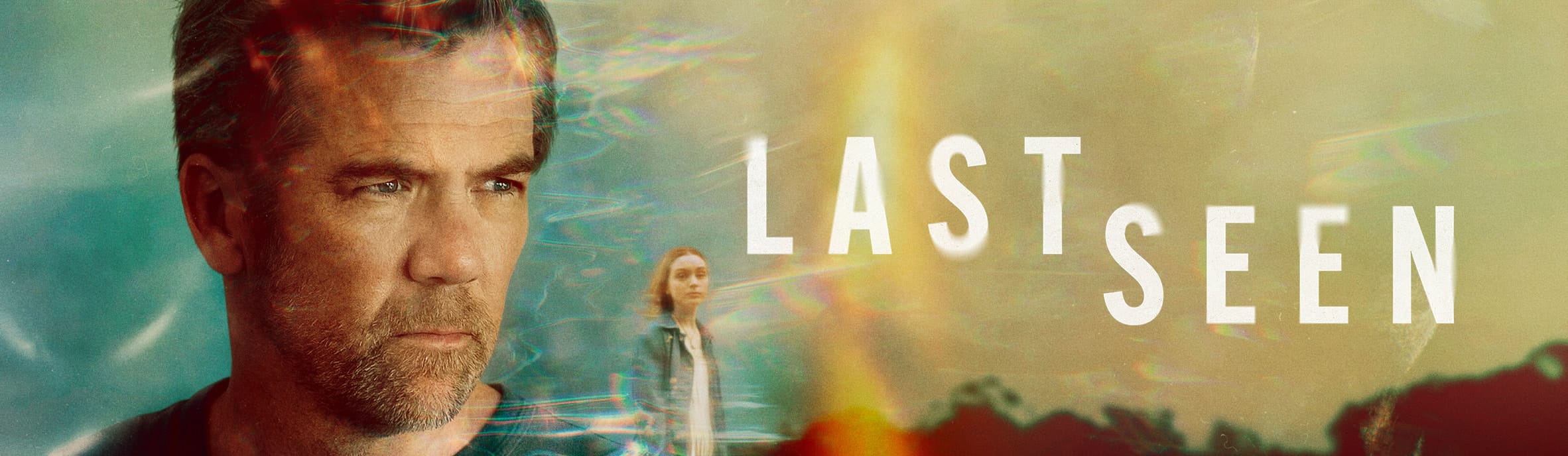
The Last Seen soundtrack landed in my inbox today, which would normally be unremarkable because my inbox currently contains more than 20,000 emails and has crossed from “organizational problem” into “possibly a cry for help from my laptop.” I get messages every day from artists, directors, actors, musicians, publicists and agencies hoping I will share their work on Scrink, and I genuinely appreciate being trusted with all of it. The problem is that eventually even good things begin to look like noise when there are thousands of them competing for your attention. I have stared at that unread number more than once while imagining the deeply satisfying click of “delete all,” followed by the sort of exhale usually reserved for people leaving a meeting that should have been an email.
Today, though, one subject line caught my attention long enough for me to open it. It announced the release of Isobel Waller-Bridge’s original score for the new Apple TV thriller Last Seen, and somewhere between the premise of the series and Waller-Bridge explaining how she approached the music, I stopped thinking about my inbox. What pulled me in was the way she talked about absence, about a family continuing to move around the space where someone should be, and about creating music that refuses to resolve neatly.
That idea stayed with me because so much of pop culture is designed to resolve things for us. Mysteries promise answers. Music tells us when to feel relieved. Television gives us finales, even when real life has a nasty habit of leaving important questions sitting unanswered at the kitchen table. Last Seen appears interested in that uncomfortable space between searching and knowing, and Waller-Bridge seems to understand that the space itself has a sound.
Last Seen and the Space Maggie Left Behind
Last Seen is a six-part Australian thriller adapted by Kris Mrksa from Ryan David Jahn’s novel The Dispatcher. Christian Schwochow directs and executive produces the series, which was set and filmed in Victoria, Australia. Apple TV premiered the first two episodes globally on September 9, 2026, with the remaining episodes scheduled weekly through October 7.
Patrick Brammall plays Ian Ridley, a police detective whose life fractured after his young daughter Maggie disappeared 11 years earlier. He now works as a police dispatcher and has never accepted that Maggie might be gone for good. Then a teenage girl calls for help, and Ian becomes convinced the voice belongs to the daughter he has spent more than a decade trying to find.
There is an obvious thriller engine there, and I can already see how easily the story could become the sort of thing that has me saying, “Fine, one more episode,” while the dishes remain in the sink and tomorrow morning quietly approaches with judgment in its heart. Missing-person mysteries are built to make us chase answers, notice clues and distrust everybody who owns an ominously lit basement.
Waller-Bridge’s description of the emotional landscape underneath that mystery is where the premise really grabbed me. In the press material sent to me, she describes the story as being about absence and the people left circling the place where Maggie should be. She also explains that she wanted the score to exist inside that same uncertainty rather than constantly offering musical resolution.
That description feels true to the way loss can change ordinary life. It gets tangled into routines, birthdays, family photographs and the way someone reacts when the telephone rings unexpectedly. You still wash dishes, answer emails, remember to buy toothpaste and stand in line at the grocery store, except all of those ordinary things now exist alongside a before and an after.
A score trying to capture that experience has to do something much more complicated than simply make us nervous.
Isobel Waller-Bridge Has Been Listening Closely for Years
The Last Seen album, released through Platoon on September 9, contains 28 tracks of Waller-Bridge’s original music. The main title track is credited to Waller-Bridge with Chloe Jean Lourdes and Tara Nome Doyle.
For anyone who knows Waller-Bridge primarily because of Fleabag, this is a useful reminder that her body of work is much wider than one magnificently inappropriate burst of choral music. Her screen credits include projects such as Emma., Black Mirror, Munich: The Edge of War, Three Women, Sweetpea and Wicked Little Letters. Her work has also moved through theatre, orchestral music and ballet, which makes sense for a composer whose music can feel interested in physical space as much as melody.
The woman who made an album about paying attention
What really deepened my interest was going back to Waller-Bridge’s 2025 album Objects. The record includes pieces with beautifully unpretentious titles such as “Pillow,” “Glass,” “Tapes,” “Hoover,” “Shoe” and “Ball,” and that ordinary language is part of the idea. Waller-Bridge described Objects as an invitation to “listen slowly,” an intentional move in the opposite direction from a culture increasingly built around faster consumption, shorter clips and fractured attention.
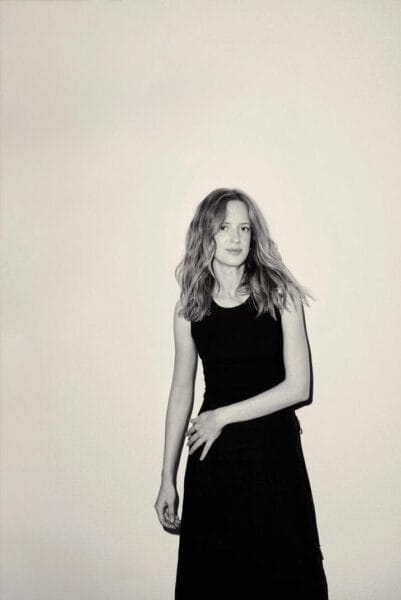
There is something almost rebellious about that now. We watch television while answering texts, answer texts while reheating dinner and listen to something else while doing both. I say this as a person currently sitting beneath the weight of more than 20,000 emails, so clearly I am not presenting myself as the patron saint of undivided attention.
Still, Waller-Bridge’s interest in slow listening feels particularly relevant to Last Seen. She has talked about wanting to find beauty in the ordinary and about allowing familiar sounds and objects enough room to become strange again. In discussing Objects, she explained that slowing down her own listening made her feel less reactive and more articulate.
That philosophy fits remarkably well with a story in which listening changes everything.
Ian’s hope is reignited because of a voice on a telephone. The series begins with a man whose entire understanding of reality shifts because he believes he recognizes something other people may not hear the same way. In that context, sound becomes evidence, memory, longing and possibly even self-deception, all because Ian believes he recognizes one voice on the other end of a telephone.
A Good Score Does Not Need to Tell Me What to Feel
One of the things I appreciate about Waller-Bridge’s approach to composing is her longstanding interest in character rather than simply atmosphere. In earlier interviews about her screen work, she has discussed beginning with scripts, tone and character, then developing music in conversation with the director and the evolving footage. She has also spoken about how the same musical theme can mean something entirely different depending on where a character is in their journey.
That may sound like a technical distinction, but we feel it as viewers.
There are scores that gently accompany a story, and there are scores that practically grab you by both shoulders and announce, “THIS IS THE SAD PART.” Sometimes that works. Sometimes I would like the violin section to trust that I have met sadness before.
The more interesting music gives us room to bring something of ourselves into the experience.
That seems especially important with Last Seen because there is already so much emotional information inside the premise. A father has spent 11 years believing his daughter might still be alive. His family has existed inside the consequences of that belief. Now one phone call potentially changes everything. The story hardly needs music standing in the corner with a neon sign that says GRIEF.
What Waller-Bridge describes instead is uncertainty. The score circles. It does not always settle. It understands that waiting for an answer and receiving an answer are two completely different emotional states.
I know which one television usually prefers because resolution feels good. We get the reveal, the closing scene and the chord that finally lands where our ears expect it to land.
We do not always get that final chord in actual life.
Missing-Child Stories Carry a Responsibility
There is another reason I wanted to write about this particular show instead of simply posting soundtrack news.
Fictional stories about missing children draw their emotional power from something horrifyingly real, which means I think the people telling those stories have a responsibility to remember the human beings underneath the mystery. Families actually live with unanswered questions. Communities actually watch cases receive intense attention for a while and then disappear from public consciousness. Some missing people receive wall-to-wall coverage while others, particularly people from marginalized communities, struggle to receive sustained attention at all.
That means I approach these stories with a certain amount of caution. I want the mystery to remember the human beings inside it.
I do not need trauma turned into a personality upgrade, and suffering does not automatically make someone noble. Deeply hurt people are still capable of hurting other people, and understandable desperation can lead to choices that require accountability. Loving someone does not magically make every decision made in their name healthy, justified or harmless.
That is one of the most interesting tensions built into Last Seen. Apple’s own description tells us Ian will stop at nothing to find Maggie and reunite his family. The phrase “whatever the cost” works beautifully in a thriller trailer, but in a human life somebody usually pays that cost.
Who gets hurt when one person’s need for an answer becomes more important than everyone else in the room? What happens when hope becomes an obsession? At what point does refusing to give up on someone begin requiring other people to surrender pieces of themselves?
Those are harder questions than simply asking whether Maggie is alive.
Early critical responses suggest the show itself may inspire some debate about how well it answers them. The Guardian praised Last Seen as one of the standout shows of the year, while the Financial Times found the plotting more familiar and dependent on genre conventions. That split is interesting because it suggests viewers may respond very differently to the mystery mechanics even while engaging with the emotional material underneath them.
Personally, I am more interested in that emotional material anyway.
“Never Quite Resolving” Might Be the Whole Point
I keep coming back to Waller-Bridge’s phrase “never quite resolving” because so much of life happens without the satisfying answers television has trained us to expect. We want to know why someone left, why something happened or why a person we loved could not remain the person we needed them to be. Sometimes we learn the answer and sometimes we do not, yet the next morning still arrives with coffee to make, dogs to let outside, clean socks to find, bills to pay and friends sending ridiculous memes at precisely the right moment.
That is what makes the idea of scoring absence so interesting to me. People can keep moving without having closure, and they can love someone fiercely without sacrificing every boundary or piece of themselves in the process. Pop culture has spent a long time romanticizing the person willing to destroy themselves in the name of love. I am far more interested in what happens when love, hope and self-respect all have to occupy the same room.
Waller-Bridge’s unresolved score feels appropriate for a story asking those kinds of questions because tidy music would almost be dishonest.
So Yes, I Am Glad I Opened the Email
There is a mildly ridiculous bit of symmetry in the fact that I nearly missed a story about paying attention because too many things were demanding my attention.
When your inbox contains more than 20,000 messages, each new email begins to look less like communication and more like another grain of sand arriving at a beach that already has adequate inventory. Somewhere behind every subject line, though, is a person who made something and is hoping somebody will stop long enough to notice.
I cannot promise that I will become the woman who answers 20,000 emails by Friday. I would like us all to maintain realistic expectations and healthy blood pressure.
What I can say is that today one of them reached me.
It led me to a composer whose recent work has actively argued for slower, more deliberate listening. It led me to a series about what happens when one sound breaks through 11 years of grief. It led me back to something I occasionally forget when the pitches pile up, the notifications multiply and everything starts to feel urgent at the same time.
Attention is not an unlimited resource, which may be exactly why giving it to something can mean so much.
Isobel Waller-Bridge didn’t make me want to tackle organizing my inbox.
She did make me want to listen before I delete.
For today, I will take that as progress.
Content note: Last Seen deals with the disappearance of a child, grief and potentially distressing themes. If this subject connects to a personal crisis for you, call or text 988 in the United States for immediate support.