…and Honestly It Knows Me Too Well
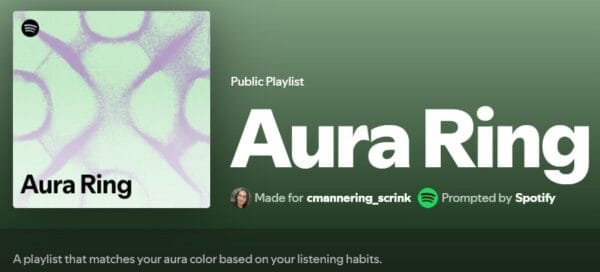
Spotify Aura Ring dropped me into one of those delightfully specific music moments that feels a little silly until it absolutely nails you. And as you know, I am incredibly music motivated. So when the Spotify app landing page suggested I create a playlist for my aura, I jumped right on that.
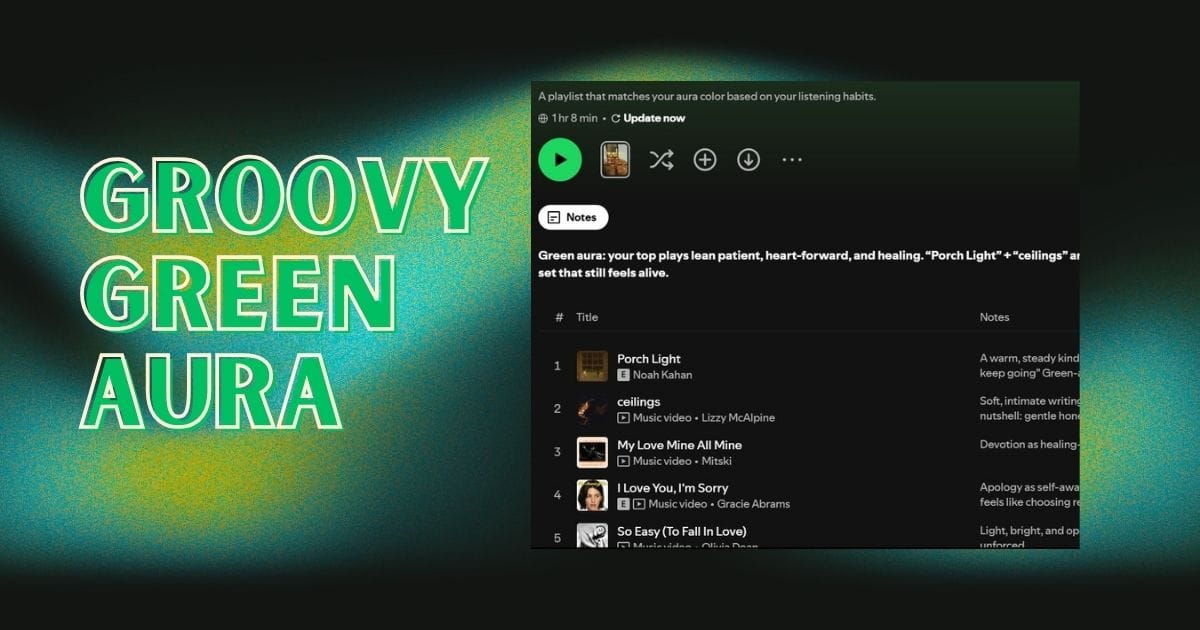
Using Spotify’s prompt-based playlist feature, I ended up with a green aura playlist built from my listening history, which Spotify framed around healing, balance, and compassion. That read on me was annoyingly accurate in the way only an algorithm with receipts can be. Spotify’s current prompt-to-playlist tools are part of its beta AI and prompted playlist experience for listeners, not some giant mystical rebrand of the app, but this aura concept is exactly the kind of gimmick-meets-self-portrait idea the platform tends to do well.
The green aura verdict actually made sense
Spotify’s own aura language for green is calming, nurturing, emotionally intelligent. My playlist description said my top plays leaned patient, heart-forward, and healing, with Noah Kahan’s “Porch Light” and Lizzy McAlpine’s “ceilings” anchoring a calm, balanced set that still feels alive. You know what? Fair.
There is a very particular kind of self-recognition that happens when a platform describes your taste a little too cleanly. Not in a spooky way. More in a “well, yes, I do keep returning to songs that feel like a hand on the shoulder instead of a fireworks show” kind of way. Green was not flashy. Green was not chaotic. Green was emotionally literate, a little tender, and committed to processing feelings without turning them into performance art. Haha, I feel called out by how accurate this is.
What worked best about the playlist
According to Spotify’s support and product notes, these playlist tools are designed to respond to prompts about moods, scenarios, colors, and aesthetics, then personalize the results around your taste. That lines up with the prompt Spotify used here, which specifically told the system to build around aura, mood, and feeling.
The new-to-me songs gave the feature real value
That is where I was most charmed. Some of the tracks were repeats I have already loved within an inch of their lives, but some were genuinely new to me, and those are the songs that made the feature feel worth opening in the first place.
When a personalized playlist works, it gives you that tiny exhale moment. Earbuds in. Dishes in the sink. Shoulders finally unclenching because a song you would not have picked for yourself lands at exactly the right emotional temperature. That is what this playlist did at its best. It pulled together soft confessionals, restrained ache, and steady-hearted love songs without making the whole thing feel mushy. “Bags” by Clairo, “Sienna” by The Marías, and “I Thought I Saw Your Face Today” by She & Him all fit that gentle-green lane. So did “White Keys” by Dominic Fike, which your playlist notes described as healthy processing disguised as a catchy song. Honestly, that line alone deserved a slow clap.
The repeats were the downside
The less magical part was the déjà vu. A lot of us use Spotify for discovery and comfort in roughly equal measure. The problem is that a listening-history-based playlist is always going to lean toward the songs you have already fed into the machine. So yes, seeing familiar favorites like“I Love You, I’m Sorry,” “BIRDS OF A FEATHER,” “I Wanna Be Yours,” and “the perfect pair” made emotional sense. It also made the playlist feel a little like my own brain had organized a reunion tour.
That is the trade-off. Spotify knows my habits, but it really knows my habits.
This is a cool feature, but it may be a one-and-done for now
That is the piece that kept me from fully falling in love. Spotify’s prompt-based playlist tools can refresh over time, and the company says Prompted Playlist can stay fresh based on your listening patterns. But when your aura result is rooted in the listening history you have already built, it is hard not to feel like the color is somewhat locked in unless your habits genuinely change.
To get a new aura color, I would probably need a whole new soundtrack to my life
And not in a cute, one-week hyperfixation way. I mean a real shift. Different moods. Different loops. Different artists on repeat while I am driving, walking, dissociating in the cereal aisle, or pretending I am not listening to the same heartbreak song for the ninth time. The aura result feels less like a mood ring and more like an annual performance review from my streaming habits.
That is not necessarily a flaw. In fact, it may be the point. The feature works best as a snapshot. It catches the emotional climate of your listening life right now and turns it into a playlist with a neat little thesis statement. But because of that, I do not know how often I would use it back-to-back. Once you have your green, your blue, your pink, whatever it is, there is a good chance the next pull will feel more like a rerun than a revelation.
Still, I liked it, and I would absolutely check back in next year
This is where I land: Spotify Aura Ring is fun. It is thoughtful enough to feel personal and gimmicky enough to stay light on its feet. It gave me a green playlist that mostly understood my emotional lane, introduced me to a few songs I genuinely appreciated, and mirrored back my own listening patterns with just enough accuracy to make me laugh and slightly squint at the screen.
That feels like a win.