Listening to Sleep Token genre-bending rock is the first time I have willingly, happily, put a “metal-adjacent” band into my regular rotation without flinching like a startled cat. I used to avoid anything that felt rage-inducing or scream-forward. Then a few months ago I learned something that sounds obvious but genuinely changed my listening habits: sometimes heavy music is not a mood, it is a container. A soft place to put a hard feeling.
Now songs like “Take Aim,” “Give,” and “The Apparition” live in my earbuds like emotional support songs. On the way to driving Amelia to school yesterday morning she was like, “I did not know you liked rock music.” I scoffed because I grew up listening to Aerosmith, Van Halen, and Heart, all bands I equate with rock. In my head, that is Rock with a capital R. So what changed?
Honestly, the genres did. Or at least the way we talk about them did. Somewhere between the record store era and the streaming era, music got a thousand new names, and somehow that made it easier and harder to find your place at the same time.
The genre explosion is real
Back in the 80s and 90s, you could walk into a record store and the bins basically said: Rock, Metal, Alternative, maybe “Hard Rock” if the clerk had strong feelings. Now it feels like every song comes with a family tree, a subcommittee, and a color-coded spreadsheet. There is alternative metal and progressive metal and post-metal and djent and indie pop and synthwave-adjacent whatever, and at a certain point you either lean in or you become the person muttering, “In my day, we had three genres and we were grateful.”
Sleep Token is exactly the kind of band that makes the whole genre conversation melt into a puddle. You will see them described with labels like alternative metal, indie pop, progressive metal, post-metal, and djent, sometimes all in the same breath. And what is funny is none of those labels fully explains why a song like “Take Aim” can feel like a slow exhale while still living in the same world as heavier tracks. If genre is supposed to be a shortcut, Sleep Token is the scenic route. Gorgeous, confusing, and you end up somewhere emotional whether you planned to or not.
So how does it get “worked out,” exactly?
Honestly, it is messy, and I kind of love that. Genre is not some official board meeting where everyone agrees on the label and then stamps it on your forehead. It is more like a bunch of people pointing at the same song from different angles and saying, “Okay, but what is this?”
Part of it is just the sound. Like, what are we actually hearing? What is driving the song: chuggy guitars, airy synths, a pop structure, a metal structure, vocals that float instead of scream, drums that feel technical or tribal or both. This is where people start throwing around terms like progressive metal or djent because they are trying to describe the mechanics, the ingredients, the way the thing is built.
But then there is the social side, which is sneakier than people admit. Who tours with who matters. Who shares an audience matters. What festivals book them matters. Even what fans decide to call it while they are half-laughing and half-fighting online at 2 a.m. matters. Genre is basically a neighborhood sometimes. You might not sound exactly like your neighbors, but you are all at the same cookout.
And then there is the algorithm, which is the part that makes me feel like I need to take my blood pressure. Streaming platforms and playlists love a label because labels help them place you. So you get this third layer where marketing language, playlist tags, and press descriptors start shaping what we think we are hearing. Not always in a fake way, just in a “we need words for this fast” way. Sometimes the tag is accurate. Sometimes it is just a magnet trying to pull the right listener in.
And Sleep Token thrives in that contradiction soup. They do softness without being “easy,” and they do heaviness without turning your nervous system into confetti. They sit right in that place where you can feel intensity without it being aggressive, and I think that is exactly why someone like me, who used to side-eye anything remotely metal, can end up with “Take Aim” on repeat like it is a coping mechanism.
Who Sleep Token are (and why the mystery matters)
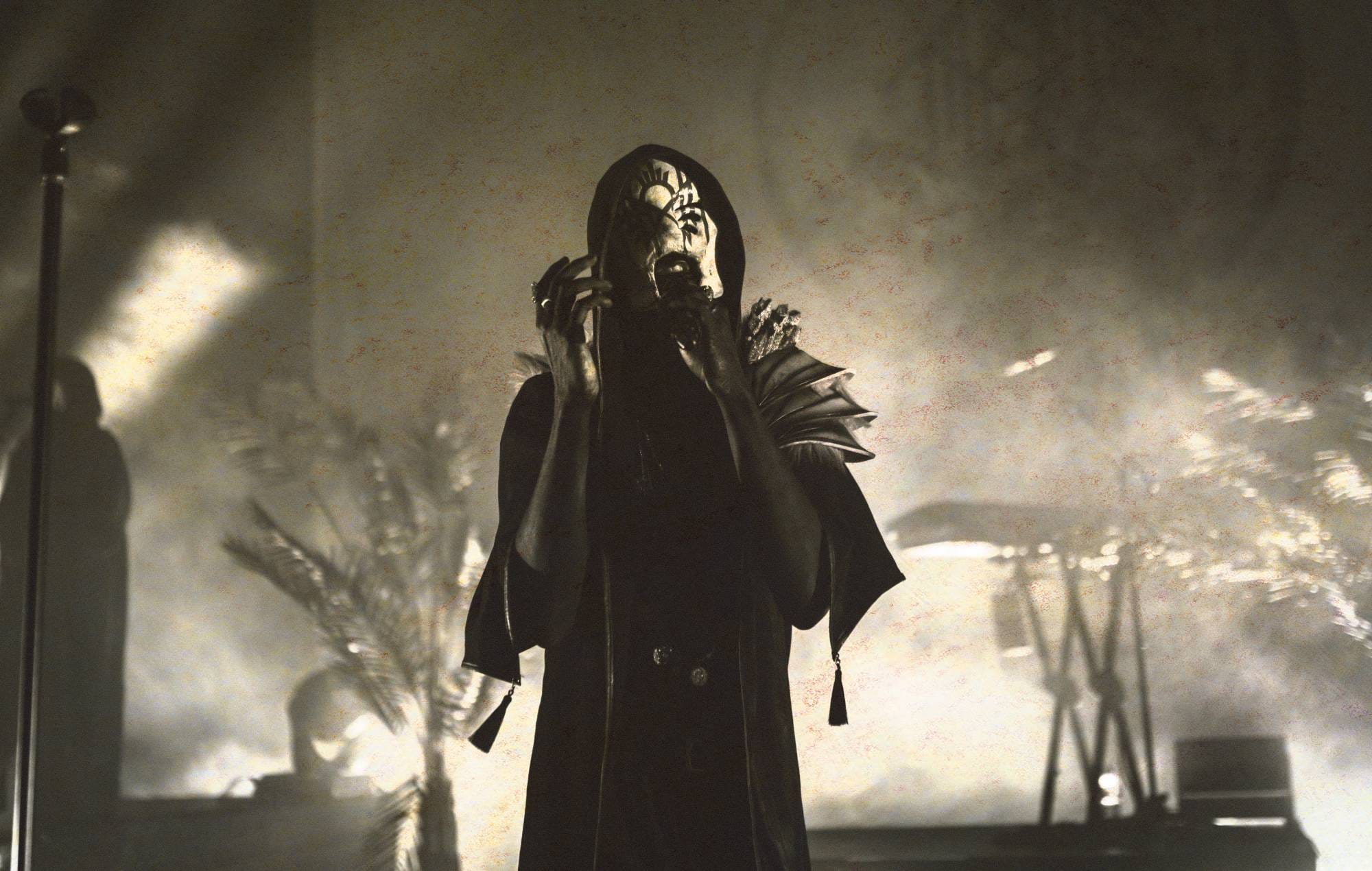
Sleep Token are an English rock band formed in London in 2016. The members are anonymous, performing in masks and using names like Vessel and II, with the wider lineup often represented by Roman numerals. If you are the kind of person who loves lore, this is candy. If you are the kind of person who prefers your artists to be a little more, I do not know, human-faced, it can be a lot.
Their anonymity is not just a gimmick, though. It changes the way you listen. When a band refuses to give you the usual celebrity access, you stop scanning for relatability and start paying attention to the emotional architecture of the songs. The voice becomes a character, not a personality. The lyrics become a place you can enter without feeling like you are trespassing on someone’s private diary.
And yes, I know, mystery in music is not new. Artists have always built worlds. What feels modern is the way Sleep Token’s world-building hits in an era when we are overexposed to everyone all the time. A little distance can be intimate. That is the paradox.
The masks are part of the appeal, and also not for me in real life
Here is where I get honest: I do not know if I would ever want to see Sleep Token in concert. Not because I doubt the music would hit. It would. But the masks and the full-on theatrics might be too much for me, in a way that is hard to explain without sounding like I am judging anyone who loves it.
I have learned the hard way that my brain does not always interpret performance as safe performance. When I went to see Ghost, I had moments where the pageantry tipped from fun into unsettling. Like my body forgot it was supposed to be impressed and decided, nope, we are on alert now. A little scan of the room like I am looking for the exit even though nothing is actually wrong.
So when I look at Sleep Token, part of me is curious, and part of me is like: why all the hiding? Why the masks? Why the anonymous ritual vibe? It freaks me out, man.
And I get it. The anonymity can be art. It can be boundary. It can be a way to keep the focus on the music, not the celebrity machine. I respect that. I even like it when I am alone with my earbuds and I can control the volume and the lighting and my own nervous system.
But a live show is different. Live shows are bodies, proximity, bass you feel in your ribs, and a crowd that wants you to surrender to the moment. Sometimes I can do that. Sometimes I cannot. There is no moral victory in forcing it.
Maybe my version of devotion is letting the songs be mine, in the family room, on the school run, with a hand on the steering wheel and a calm playlist that still knows how to grow teeth when it needs to.
The music: heavy as a texture, not a threat
Here is the part I keep trying to explain to people (really just my middle-child, Finn, who immediately tunes out the hard rock or metal vibes as I used to) who think metal automatically equals anger. Sleep Token’s catalog makes room for tenderness, yearning, devotion, and that specific kind of longing that tightens your chest right before you text someone you absolutely should not text.
“Take Aim” and “Give” are on their 2019 debut album, Sundowning. “The Apparition” shows up on Take Me Back to Eden (2023). That matters to me because these songs are not built like a dare. They are built like an invitation. They can get intense, sure, but intensity and aggression are not the same thing.
Sometimes intensity is just sincerity with the volume turned up.
And for anyone with a trauma-shaped nervous system, that distinction matters. A lot. There is a difference between music that feels like it is coming for you and music that feels like it is standing next to you while you take a breath and rinse the plates and try to answer your kid with patience instead of panic. One cheeky note, and then I will behave: if genre gatekeepers want to fight about whether this is real metal, they can do it quietly in the corner while the rest of us have feelings.
Are they still making music and touring?
Yes. Sleep Token are active (2016 to present). Their studio albums include Sundowning (2019), This Place Will Become Your Tomb (2021), Take Me Back to Eden (2023), and Even in Arcadia (released May 9, 2025). Which is another reason this does not feel like a trend I discovered late. They are not a nostalgia act. They are still building.
Touring is the part that is a little check-the-calendar depending on when you are reading this. They did a headlining U.S. run in fall 2025, and depending on the moment, you might see quiet stretches where the next dates are not publicly posted yet. For me, that is almost a relief because it means I do not have to immediately decide whether I am brave enough for the masks in a crowded room. I can just keep listening the way I like best: volume controlled, seatbelt on, Amelia in the passenger seat giving me side-eye like I am a mystery, too.
The playlist peace treaty between classic rock me and Sleep Token me
This is the part where I stop pretending it is only about the band and admit it is also about me. About how I have changed, and how listening habits change, and how sometimes you grow up and realize you want different things from rock music than you wanted when you were thirteen.
80s and 90s rock taught me how to feel powerful. Sleep Token is teaching me how to feel tender without apologizing for it.
And maybe that is what all these genres and sub-genres are really doing. Not making music more confusing, but making it easier to find the exact emotional temperature you need on a given day. Sometimes you want “Dream On.” Sometimes you want “Give.” Sometimes, if you are lucky, you realize they are not enemies. They are just different rooms in the same house.
And if one of those rooms happens to be candlelit, masked, and a little spooky, you know what? I can appreciate it from the doorway.