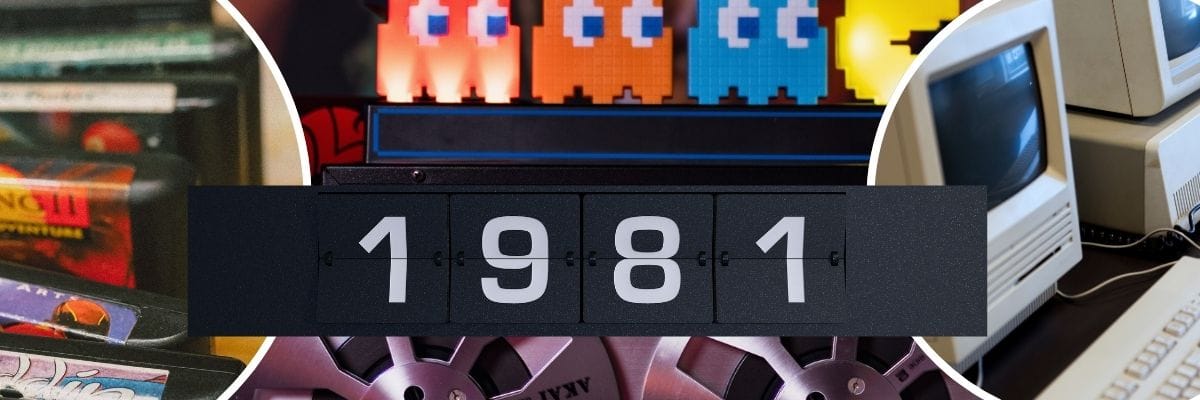
A small disclaimer before we begin: I hope this is a fun read. Yes, I know it is long. It has been 45 years, gosh darn it. We have covered a lot of historical ground, emotionally and technologically.
Having been born in early 1981 means I have spent my whole life standing in the strange little doorway between Gen X and Millennials, not quite able to fully claim either room without someone checking the birth-year chart and getting weird about it. Me. I’m someone. I can never remember which generational span I belong in.
I understand that someone somewhere drew a line and said, “Here. This is where one generation ends and another begins.” Fine. Put me in the Millennial folder if you must. But emotionally? Culturally? Spiritually, while standing in a family room with wood paneling and a TV Guide on the coffee table turned to find when Who’s The Boss will be airing? I am absolutely part of that odd little bridge group that remembers life before the internet took over, but also came of age just as everything started moving online.
Maybe I will just make up my own generation as a joke. Generation Christennial. Or ChrX, which sounds slightly like a rejected superhero team with excellent eyeliner and a loud ass dial-up modem.
But the real point is not the name. The real point is that some of us grew up in an analog world, became adults in a digital one, and had to keep adapting without ever getting a formal orientation packet. We went from landlines to smartphones, from handwritten notes to group chats, from film cameras to camera rolls with 14,000 photos, and somehow we are still expected to remember all our passwords while figuring out what the heck AI is all about and how it’s destroying the environment and terminating jobs that we desperately need to hold onto because we only have 15 more years until we can retire!
And honestly, that explains a lot about us.
We Remember Childhood Before Everything Was Online
I miss the texture of that childhood sometimes. Not because it was perfect, because please, let us not pretend the 80s and 90s were one long wholesome cereal commercial. They were not; the number of kids who were latchkey kids, fending for themselves, was alarming. I was lucky, my mom was always home, even when she went back to work because she had a home daycare. But there was a pace to things that feels almost impossible to explain now without sounding like I am trying to sell someone a rotary phone on Etsy with words like “nostalgia” and “vintage.”
We had landlines. We had Saturday morning cartoons with built-in morals. We had Walkmans, then Discman upgrades, then the wild magic of MP3 players that made us feel like we had personally been invited into the future. Music was something you waited for, collected, borrowed, taped, burned, and carried around like evidence of who you were trying to become.
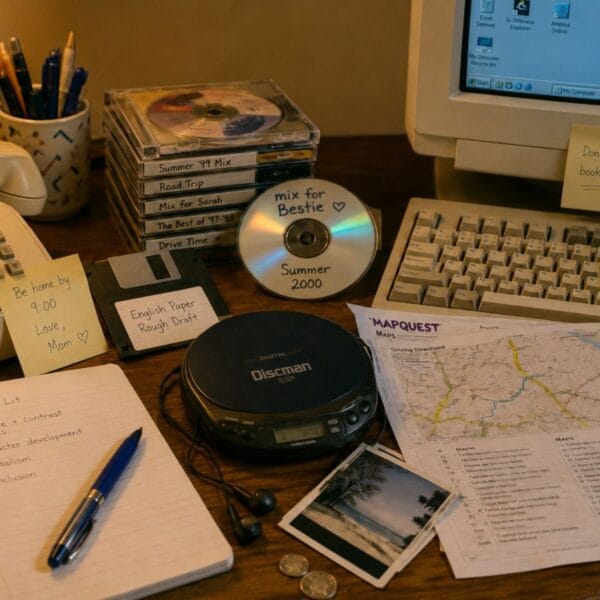
There was a real art to waiting by the radio with one finger hovering over the record button. You had to be ready. You had to be committed. You had to accept that the DJ might talk over the intro and ruin your entire emotional experience. And then you put tape over the little hole in the cassette so no one could tape over your hard work.
We had AIM away messages that did far too much emotional labor for a few lines of text. We heard “You’ve got mail” and felt a tiny thrill, because email still seemed like a door opening instead of a haunted closet full of school notices, password resets, and coupons from places you visited once in 2014.
We typed school papers on word processors while massive Encyclopedia Britannica volumes sat nearby like an entire wall of authority. Then, little by little, computers arrived in our homes and classrooms, looking less like sleek devices and more like office equipment that had wandered into domestic life and decided to stay. I remember my first hella expensive Gateway, I bought it with my own money, it was EXPENSIVE, it came in a box decorated like a cow. No, I don’t know why.
We spent quality time dying of dysentery on Oregon Trail and chasing Carmen Sandiego around the globe. For a lot of us, that was educational gaming. We learned geography, problem solving, and the harsh truth that no matter how carefully you packed your wagon, someone named Silas or Ophelia was probably not making it to Oregon.
No offense to them. The trail was rough.
School Required Patience, Index Cards, And A Strong Relationship With The Library
Research used to be a whole event. You did not just open a browser and type a question into a search bar. You went to the library, walked through the stacks, pulled books from shelves, and hoped the one source you needed had not already been checked out by someone in the other fourth-grade class.
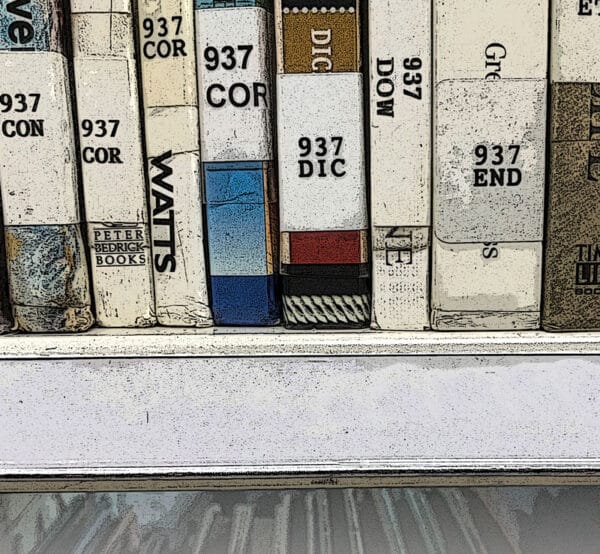
The Dewey Decimal System was not a quaint idea. It was survival. There was a card catalog in wooden drawers; do not even think about leaving the index card on top, you learn to put that away. Eventually, you might have had a computer catalog if your library was feeling fancy, either way, you had to know how to look for things in a way that required actual thought. You could not just ask the algorithm to understand your messy little half-question. You had to narrow it down yourself, write down the call number, and go hunting.
We had overhead projectors in math class, and there was something weirdly dramatic about them. The teacher would roll one in, place a clear sheet on top, and suddenly their hand was enormous on the wall, writing equations in that squeaky marker ink that always looked slightly too wet. And those markers had such a distinct smell. Every classroom had its own little theater of transparency film and mild eye strain. Take those notes down before the teacher grabs a wet paper towel and wipes it all away.
Some of us were pulled into Gifted and Talented programs where we were asked to write research papers about Marie Curie and learn algebra while still young enough to need help remembering our lunch money. I have complicated affection for that. On one hand, I loved being treated like my brain could do interesting things. On the other hand, there is something very funny and slightly tragic about a child being handed a citation format before she has mastered emotional regulation.
Tiny stressed-out academics, all of us. Someone should have given us juice boxes and a union. Though, not gonna lie, my high school also had us drinking milk from plastic milk pouches that were entirely too similar to breast implants.
Making Plans Used To Require Commitment
My kids look at me like I am crazy every time I tell them I need notice. I can’t just make plans on the fly. Well, I can, I’m physically able, but it does cause great anxiety.
But there was a time when people could simply become unreachable, and we all accepted this as normal.
Plans had to be made ahead of time because once someone left the house, they were gone. Not gone in a mysterious way. Just gone in the regular, pre-cell-phone sense. They were at the mall, or the movies, or a friend’s house, or somewhere between all three, and unless they found a payphone and had a quarter to call you, you had no real-time updates.
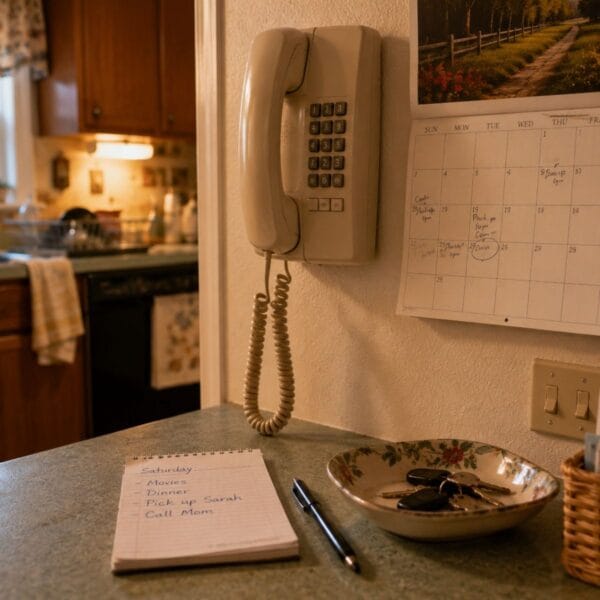
Weekend plans were negotiated in school hallways, over landlines, and through carefully folded notes that felt more official than some legal documents. You had to know where you were meeting, when you were meeting, who was getting a ride, and what the backup plan was when somebody’s mom said no at the last minute.
There was no group text to rescue the chaos. No shared location. No “I’m five minutes away” message sent by someone who had not yet put on shoes. You either figured it out before everyone scattered, or you spent your Saturday wondering whether the plan was still happening while watching reruns and eating cereal out of a plastic bowl.
And somehow, we survived. We got left places occasionally, yes. Not accidentally, we were just dropped at movies, arcades or at the mall, because those were our own little community centers. We were welcomed and wanted there and for the most part we were respectful and responsible in those spaces. We stood by mall fountains, tossing in pennies and contemplating if we were too old for World of Science and the KB Toystore. But we also learned how to make decisions and stick to them, which feels like a lost art in a world where every plan now has seven revisions, three polls, and one person who responds with “maybe.”
Friendship Moved At The Speed Of Stamps, Notes, And Busy Signals
We had pen pals. Real ones. With stamps.
That sounds so simple, but it was intimate in a way I do not think we always appreciated at the time. You picked out stationery. You wrote by hand. You folded the paper, sealed the envelope, added a stamp, and sent your words into the world with absolutely no guarantee of a quick reply.
There was no typing bubble. No read receipt. No little heart reaction to reassure you that your message had landed. You waited. Days passed. Sometimes weeks. Then one afternoon, there it was, a letter with your name on it, and suddenly the whole day had a little sparkle around the edges.
Friendship took effort, but it also had room to breathe. You could miss someone without monitoring them. You could wonder what they were doing without checking their stories. You could sit on your bed and write everything down, not for an audience, not for engagement, just for one person who might understand.
I am not saying every old way was better. Some silences were painful. Some friendships faded because distance made things harder. But there was something beautiful about connection that required care instead of constant access.
Our Technology Grew Up Right Beside Us
What makes this little bridge generation so strange is that our technology changed at almost the same pace we did. We did not just watch the world update around us. We updated with it, awkwardly and constantly, like a computer that kept needing to restart at the worst possible moment.
We remember bulky cell phones with removable faceplates, which were somehow both ridiculous and thrilling. Changing the color of your phone felt like a personality shift. Were you translucent blue? Sparkly purple? Silver with attitude? These were not small choices. These were declarations. Remember when call-waiting happened, oh yeah, no sneaking calls to your crush and hanging up. And then phone companies added the ability to three-way call people. We all had that one friend who would three-way call but one member on the call didn’t know there was another person. So many confidences dashed! Tragic. No wonder I have trust issues.
GPS was a stack of MapQuest printouts sitting on the passenger seat. You highlighted the route, folded the pages badly, and prayed that the directions were accurate. Missing a turn was not a minor inconvenience. It was a full-body situation. Someone had to stay calm, someone had to read the next step out loud, and someone’s dad was probably going to insist he knew a shortcut. God forbid there is construction. Just turn around, man, go home, it wasn’t meant to be.
Photos were taken on film cameras, which meant you had to live with uncertainty. You did not know whether the picture came out until the film was developed. Someone might have blinked. Someone might have moved. Someone’s thumb might have taken up half the frame. Indoor photos sometimes involved flashes that made the whole room feel like a tiny science experiment, and every family gathering had at least one adult saying, “Take another one just in case.” Yes, I had a camera where you had to attach the flash bulbs and they literally exploded, they were called Flashcubes, look that up. You won’t believe it.
Now we take fifteen photos of the same plate of food and still complain that the lighting is weird.
We Had The Early Internet Before It Became Everyone’s Whole Life
The internet, when it first entered our lives, felt like a place you visited. You logged on. The modem screamed its little robot death song. You waited. You entered the online world for a while, and then at some point, someone needed the phone, so you had to leave.
There was something almost healthy about the inconvenience. Not always fun, but clarifying. The internet was not yet the weather system we all lived inside. It was a room you entered through effort.
Then came the social internet, and we brought our whole messy selves with us.

We had MySpace, where the Top 8 was less a feature and more a public emotional ranking system. Friendships were tested. Crushes were exposed. Bands were discovered. Profile songs made everyone deeply dramatic, which, to be fair, many of us already were. And honestly, this might be there first place I started dabbling in writing my own HTML code. Of course back then it was all very table heavy. Gah!
We had LiveJournal, where people wrote in ways that were cryptic, emotional, theatrical, sincere, and occasionally exhausting. It was part diary, part community board, part group therapy session run by people who absolutely were not qualified. Still, there was something tender about it. People were trying to tell the truth about their lives before everyone learned to polish truth into content.
We lived through screen names, buddy icons, away messages, burned CDs, floppy disks, hard disks, Y2K panic, and the uneasy feeling that technology was both exciting and slightly out of control.
Then we watched the internet stop being a place and become an atmosphere. It’s a 24/7 IV for so many people now.
We Came Of Age Through A Lot Of History
Being born in 1981 means the timeline has not exactly been gentle.
We saw Desert Storm unfold when we were still kids, watching war become part of the background noise of childhood living rooms. For me, that era is tied to something oddly personal, too. My first bit of writing was published in the school transcript during Desert Storm, which feels fitting in a strange way. I was learning that words mattered while the adults on television were showing us how quickly the world could change.
We were young enough to feel the future opening up, but old enough to remember where we were when certain things changed the air in the room. Many of us were college students or young adults around 9/11. We entered adulthood in a world that suddenly felt more fearful, more surveilled, and more politically charged. We can tell you exactly where we were. I was in Memorial Hall at the University of Delaware. It is etched into a dark place in my brain.
Then came the Great Recession, right as so many people our age were trying to build careers, pay rent, manage underwater mortgages, start families, or figure out what stability was supposed to look like in the first place. We were told to work hard, stay loyal, be grateful, and keep pushing, even as the floor kept shifting under our feet.
And that pattern never really stopped. We have lived through a lot of wars, a lot of national fear, a lot of flags on screens, and a lot of complicated grief that people were often expected to process quietly while still going to school, going to work, paying bills, and acting normal.
A lot of us worked multiple jobs. We stretched paychecks until they were practically see-through. We ate from dollar menus and then got lectured about wellness by people who had pensions, affordable college, cheaper houses, and the nerve to act like avocado toast had personally destroyed the economy. Which, respectfully, no.
Later, we lived through a pandemic that rearranged daily life, grief, work, parenting, friendship, school, caregiving, and the basic act of being around other people. It did not just interrupt normal life. It exposed how fragile “normal” had already become.
And now there is this strange push to shove everyone back into old structures, as if the last few years were a weird detour instead of a permanent rupture. Offices, meetings, rigid schedules, forced togetherness, all of it keeps being sold as a return to connection. But for many of us, that era is over. Not because we hate people. Not because we forgot how to be in community. Because we learned the difference between connection and control.
We learned that work can happen without fluorescent lights. We learned that rest is not laziness. We learned that families, bodies, disabilities, caregiving, grief, and mental health do not fit neatly inside someone else’s preferred schedule. We learned that “back to normal” often means back to ignoring the people who were barely surviving normal in the first place.
We also grew up watching major policy and cultural shifts that expanded rights, protections, visibility, and possibility for people who had been pushed to the margins for too long. That mattered. It still matters. So it is especially jarring now to watch some of those gains being challenged, weakened, or rolled back. There is a particular kind of heartbreak in realizing progress is not a straight line, and rights are not as permanent as we were told they were.
Maybe that is part of why our generation feels so tired and so alert at the same time. We have seen enough change to know things can get better. We have also seen enough backlash to know better is never guaranteed.
Some things simply should not go back to the way they were. Change and adaptation can be really good.
And then came AI
And now here we are, standing in the middle of the AI era, watching yet another massive shift unfold in real time while still trying to remember which app controls the thermostat. It feels a little like we climbed into the DeLorean by accident, hit 88 miles per hour, and landed in a future that looks familiar enough to function in but strange enough to make us whisper, “Great Scott, who approved this?”
Because yes, it is incredible. It is also deeply weird.
We were raised on the idea that the future would announce itself with flying cars, hoverboards, and sneakers that tied themselves. Instead, the future showed up as a chatbot that can summarize your inbox, a refrigerator that wants Wi-Fi, and a smart light that has apparently developed its own emotional boundaries.
I ask Google for the weather. I ask Siri to set a timer. I ask ChatGPT to help me write alt text for a complicated image that I want to make accessible. Meanwhile, I am still manually resetting passwords, yelling “representative” into automated phone systems, and trying to figure out why one smart light has decided it lives in a different time zone.
That is the strange little Back to the Future feeling of being born in 1981. We remember the past clearly enough to miss parts of it, but we are fluent enough in the future to know how to survive it. We are Marty McFly staring at the town square, recognizing the shape of the place while realizing all the rules have changed.
It is a lot. It has always been a lot. And maybe that is why people in this bridge group often carry such a strange mix of competence and exhaustion. We know how to adapt because we have been doing it forever. We also know enough to be suspicious when someone announces that the next big thing will make life easier for everyone, because historically, “everyone” tends to be doing some very heavy lifting in that sentence.
We May Be One Of The Last Generations With Real Childhood Privacy
This is the part I keep coming back to, because it feels bigger than nostalgia.
We may be one of the last generations whose childhood mistakes were not automatically uploaded, screenshotted, archived, and dragged into the future. Our bad haircuts lived in photo albums. Our bad moods stayed in bedrooms, notebooks, slammed doors, or long phone calls with friends who understood when to just let us ramble on. Not short-hand texts with zero context or depth.
Our bad choices were not always preserved in the cloud. Our awkward phases did not become searchable proof that we were once unfinished human beings. We had cringe, of course. We had so much cringe. We simply had the mercy of limited distribution.
There is something profound about that.
I think about kids now and feel that little squeeze in my chest. Their awkward years have an audience. Their conflicts come with receipts. Their grief, joy, friendships, crushes, opinions, jokes, mistakes, and worst moments can become content before they fully understand what they are handing over.
That does not mean we had it easy. Plenty of harm happened offline. Bullying existed. Shame existed. Family dysfunction, racism, homophobia, class pressure, sexism, and cruelty all existed without needing Wi-Fi. I never want nostalgia to turn into a lie where the past gets softened so much that people who suffered inside it disappear.
But I do think we had more room to become ourselves away from permanent public documentation. We could mess up, apologize, change, and keep growing without every version of us being treated like evidence for interrogation to be picked apart.
That kind of privacy was not a small thing. It was a form of grace.
The Best Part Of The Bridge Is The Perspective
I do not want to go backward. I like modern convenience. I like being able to look things up, find directions, text friends, take too many pictures of my dogs, and order something oddly specific without having to speak to a human being. I am not trying to churn butter in the yard while complaining about TikTok.
At the same time, I do not want to pretend nothing was lost.
There was value in boredom. There was value in waiting. There was value in making a plan and keeping it. There was value in not knowing what everyone was doing all the time. There was value in having parts of yourself that did not need to be posted, performed, optimized, or explained.
Being part of this bridge generation means we can hold both truths. We can appreciate technology without worshiping it. We can remember the analog world without pretending it was kinder than it was. We can use GPS and still know that a printed map once saved somebody’s entire vacation. We can send memes and still believe handwritten letters had a particular magic.
We are old enough to remember life before the feed and young enough to understand why the feed became addictive.
That is not a bad place to stand, even if the lighting is weird and someone keeps asking us to update our software.
Born In 1981 Means Living With One Foot In Each World
I think the real feeling of being born in 1981 is not confusion so much as translation.
We are always translating between eras. We remember what it was like when phones belonged to houses instead of people. We remember when photos were developed, not deleted. We remember when school research involved books, not tabs. We remember when a person could leave the house and become temporarily unknowable.
We also know the modern world. We have adapted to it, worked in it, parented through it, loved people through it, and built lives inside it. We know how to Google what we do not know. We know how to troubleshoot. We know how to pivot, even when we are sick of pivoting and would rather sit quietly with a snack.
That is the thing about this little bridge group. We have lived through enough change to know that identity is not always cleanly labeled. Sometimes you are the kid with the Walkman who became the adult with the smartphone. Sometimes you are the person who remembers Oregon Trail and now has to understand AI. Sometimes you are technically a Millennial, emotionally Gen X-adjacent, and personally just trying to drink your coffee before it gets cold.
So fine. Call us Xennials. Call us elder Millennials. Call us the Oregon Trail generation. Call us whatever makes the chart happy.
I will be over here calling myself Generation Christennial as a private little joke, because after surviving landlines, MapQuest, MySpace, Y2K, 9/11, a recession, a pandemic, and the rise of machines that now offer to write emails for us, I think I have earned the right to be a little flippant.
Born in 1981 meant an analog childhood, a digital adulthood, and just enough chaos to keep things interesting.